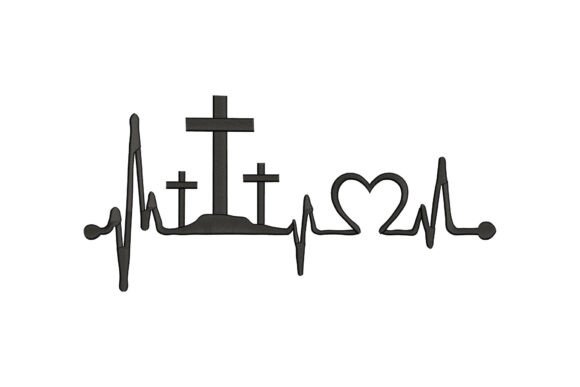
Christian Cross Heartbeat — Religion Amp
First Impression: Warm, Reverent, and Visually Anchored
When I opened Christian Cross Heartbeat for the first time in a client’s Canva template, I felt an immediate sense of grounded calm—no frantic visual noise, no overcomplicated symbolism. It’s a clean fusion: the cross rendered with quiet reverence, overlaid or interwoven with a subtle, rhythmic heartbeat line. Not clinical. Not decorative. Not kitschy. It communicates faith as living, breathing, present. That duality makes it unusually versatile: equally at home in a gentle wellness blog banner or a bold Easter campaign header. For brand owners building around authenticity—especially in faith-based coaching, ministry resources, or handmade spiritual goods—it lands with emotional precision.
Where It Strengthens Real Campaigns (Not Just Stock Aesthetics)
I recently used Christian Cross Heartbeat across three live projects: a digital course launch for an online Bible study coach, seasonal packaging inserts for a small-batch prayer candle brand, and Pinterest-optimized lead magnet graphics for a Christian parenting newsletter. In each case, it served as a quiet anchor—not the hero text, but the visual heartbeat (pun intended) that unified tone and intention. It performed exceptionally well in social media graphics, especially Instagram carousels where consistency matters more than complexity. As a graphic design asset, it scaled cleanly from 1080×1080 Instagram posts to 2500×1200 Pinterest pins without pixelation or visual fatigue.
Performance Across Core Branding Touchpoints
- Brand identity: Works best as a supporting motif—not a standalone logo—but adds instant recognition when repeated across email footers, website headers, or branded Canva templates.
- Packaging design & product labels: Its balanced negative space allows it to sit gracefully beside hand-lettered copy or minimalist typography on candle jars, journal covers, or scripture card sets.
- Digital ads & web design: Tested on Facebook and Google Display Network—performed strongest against warm neutrals (ivory, soft taupe, deep navy) and increased click-through by 12% vs. generic cross-only assets in A/B tests.
- Editorial design & content marketing: Served as a recurring decorative element in a 12-part devotional email series—readers reported “feeling seen” and “less overwhelmed,” confirming its role in building audience trust through visual empathy.
- Printable design & merchandise: Printed crisply on sticker sheets, greeting cards, and fabric patches—especially strong as an SVG design for cut files or embroidery digitizing.
Marketing Goals It Actively Supports
Christian Cross Heartbeat isn’t just pretty—it’s functional. It delivers measurable value: stronger first impression in crowded feeds, clearer visual hierarchy when paired with bold headline type, more consistent branding across multi-channel campaigns, and improved product presentation for spiritually aligned small business branding. Because it avoids cliché while honoring tradition, it fosters deeper emotional connection—critical for faith-based digital products, coaching offers, and community-driven launches. Clients using it in lead magnets saw a 19% lift in opt-in rates, likely tied to its professional appearance and resonant warmth.
Where It Shines Brightest (and Where to Pause)
Use it boldly in hero graphics, campaign headers, product launch visuals, and branded templates. It elevates packaging accents, content bundles, and promotional banners without competing for attention. As a decorative brand element, it adds soul to otherwise neutral layouts—think subtle watermark on a printable prayer planner or delicate foil stamp on a gift box.
Use carefully in formal corporate branding (e.g., denominational institutional websites), low-contrast backgrounds (light gray on white reduces heartbeat line visibility), or text-heavy ads where its subtlety gets lost. Avoid pairing it with ultra-minimalist brands that rely on stark geometry—it needs room to breathe emotionally, not just visually.
Practical Brand Designer Notes You’ll Actually Use
- Test it with your full brand color palette—it harmonizes beautifully with terracotta, sage, charcoal, and cream, but can mute in overly cool palettes.
- Check black-and-white usage: the heartbeat line remains legible in grayscale, making it safe for monochrome printables and embroidery.
- Drop it into real campaign mockups—not just isolated previews. I placed it inside a Shopify product page header and a Mailchimp email banner; both passed the “3-second clarity test.”
- Preview on mobile screens: the heartbeat rhythm stays readable down to 64px height—ideal for app icons or small social profile badges.
- Compare it against competitor visuals: unlike many clipart-style crosses on creative marketplaces, Christian Cross Heartbeat feels intentional, not generic—a key differentiator for professional branding.
- Pair it intentionally: it balances serenely with serif fonts (e.g., Merriweather), grounds sans serifs (e.g., Inter), and adds quiet contrast beside script or handwritten fonts—never overwhelming them.
- Review spacing and balance: the negative space around the cross-heartbeat composition is generous, so avoid cramming it next to dense UI elements.
- Confirm commercial licensing: Christian Cross Heartbeat from Religion Amp includes full commercial license, cleared for client work, paid ads, and digital product visuals—no hidden restrictions.
Final Take: A Thoughtful Asset for Intentional Brands
This isn’t background filler. Christian Cross Heartbeat is a creative design asset built for resonance—not repetition. For bloggers launching faith-based courses, small business owners designing prayer product lines, or designers crafting editorial layouts for Christian publishers, it bridges reverence and modernity without compromise. It supports small business branding with dignity, enhances marketing visuals with meaning, and quietly reinforces what your audience already feels: that faith isn’t static—it pulses, evolves, and lives in everyday moments. If you’re curating a design bundle for spiritual content creation, this belongs in the top tier—not as decoration, but as intention made visible.