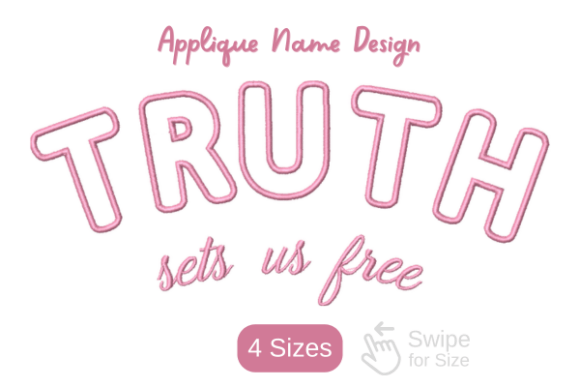
Truth Sets Us Free Applique — Religion Amp
First Impression: Warm, Anchored, and Quietly Confident
When Truth Sets Us Free Applique landed in my design review queue, I paused—not because it’s flashy, but because it carries weight without shouting. It reads as sincere, grounded, and reverent, yet avoids stiffness or cliché. The appliqué style suggests texture, craft, and intentionality—ideal for brands rooted in faith-based values, wellness, coaching, or purpose-driven entrepreneurship. It doesn’t scream “sale” or “trend”; instead, it invites pause, reflection, and resonance. That makes it especially valuable for small business branding where authenticity builds audience trust faster than polish alone.
A Real Campaign Fit: Launching a Faith-Based Journal Series
I recently helped a spiritual coach launch a quarterly journal collection titled *Anchor Pages*. We needed cohesive, emotionally intelligent visuals across Instagram carousels, Pinterest pins, email headers, and printable product inserts. Truth Sets Us Free Applique became the quiet anchor of the entire kit—not as a logo, but as a recurring visual motif. We placed it subtly on journal covers (as an embossed foil accent), used the SVG design in Canva templates for social media graphics, and layered the PNG design over soft linen-textured backgrounds for blog banners. Its handmade warmth elevated the perceived value without sacrificing clarity or modern design sensibility.
Where It Shines Across Marketing Touchpoints
- Brand identity: Works beautifully as a secondary brand element—complementing a clean wordmark rather than competing with it.
- Packaging design & product labels: Adds tactile credibility to boxes, tags, and inserts—especially for journals, candles, apparel, or devotionals.
- Social media graphics: Stands out in Instagram feeds and Pinterest search results when paired with ample negative space and warm, accessible color palettes.
- Digital ads & email banners: Performs well at medium scale (400–800px wide) where its balanced composition supports visual hierarchy without crowding the message.
- Editorial design & content bundles: Serves as a unifying thread across lead magnets, media kits, and downloadable resources—reinforcing consistency across touchpoints.
- Merchandise & stickers: The SVG design scales flawlessly for vinyl cutters and print-on-demand platforms—ideal for faith-inspired merch lines.
What This Graphic Design Asset Delivers Strategically
Truth Sets Us Free Applique isn’t just decorative—it supports measurable marketing goals. Used intentionally, it strengthens first impression by signaling alignment with core values before a single word is read. It improves visual hierarchy by acting as a focal point that guides the eye naturally toward supporting text. For creative entrepreneurs building small business branding, it adds emotional connection without requiring custom illustration—saving time while preserving authenticity. And because it’s rooted in a universally resonant phrase, it fosters stronger recognition across diverse audiences—from church planters to online coaches promoting inner freedom.
Best Places to Deploy This Creative Design
Think of Truth Sets Us Free Applique as your brand’s quiet signature—most powerful when used with restraint. It excels in hero graphics for landing pages, campaign headers for email sequences, branded templates for Canva users, social media cover images (especially Facebook and LinkedIn), packaging accents like belly bands or sticker seals, content bundles for digital product launches, promotional banners for seasonal offers (e.g., Lenten resources or summer devotionals), editorial layouts for faith-based blogs, and decorative brand elements like watermark overlays or section dividers.
Where to Use It Thoughtfully
This graphic design asset thrives in context—but it’s not universal. Avoid using Truth Sets Us Free Applique in formal corporate branding (e.g., law firm websites or financial services), dense information layouts (like comparison tables or multi-step infographics), small mobile graphics under 200px wide (where detail blurs), low-contrast backgrounds (it needs breathing room to land), overly minimal brands that rely on stark geometry, text-heavy ads where legibility must dominate, or designs where it competes directly with your primary call-to-action. It’s expressive—not functional—and should never dilute your core message.
Practical Brand Designer Notes
Before locking it into your campaign, test Truth Sets Us Free Applique rigorously: layer it over your full brand color palette (not just primary hues), check how it renders in black-and-white for print or accessibility use, drop it into real campaign mockups—not just isolated previews—and preview every variation on actual mobile screens. Test readability at thumbnail size: does the phrase remain legible? Compare it against competitor visuals—is it distinct enough to stand out, yet familiar enough to feel trustworthy? Experiment with font pairings: it harmonizes beautifully with warm serifs (like Playfair Display), clean sans serifs (like Montserrat), and gentle script fonts (avoid harsh display or ultra-thin handwritten styles). Review spacing carefully—the appliqué shape needs generous margins to avoid visual clutter. And always confirm commercial licensing: Truth Sets Us Free Applique must be cleared for paid campaigns, client work, and business branding—especially if sourced from a creative marketplace or design bundle.
Why It Belongs in Your Visual Toolkit
In an oversaturated digital landscape, Truth Sets Us Free Applique offers something rare: clarity with compassion, simplicity with soul. It’s more than clipart or illustration—it’s a strategic design asset that bridges faith, feeling, and function. Whether you’re designing for Religion Amp-aligned ministries, launching a values-driven digital product, or building a recognizable visual language for your creative business, this piece earns its place through versatility, emotional resonance, and professional execution. When chosen with intention—and paired with thoughtful typography, color, and layout—it becomes a quiet catalyst for stronger audience trust, better engagement, and more memorable campaign visuals.